The Caribbean Pompeii: The City Buried in Gray
 4View gallery
Imagine sailing through the pristine, turquoise waters of the Caribbean Sea, expecting to find a vibrant tropical paradise. But as you approach the southern coast of Montserrat, the lush green mountains abruptly give way to a terrifying, monochrome wasteland.
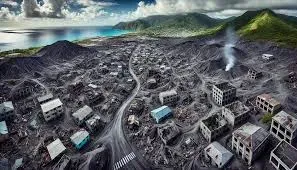
If you step ashore, you will realize with a chill that you are not walking on the ground—you are walking on top of roofs. A church spire barely breaches the surface of the earth; the top of a red British telephone box peeks out from a sea of hardened mud. How did a bustling, modern capital city end up buried alive?
The Emerald Isle’s Beating Heart
Up until the mid-1990s, the city of Plymouth was a vibrant, sun-drenched port town. As the capital of Montserrat, it was the beating heart of the island.
Known as the “Emerald Isle of the Caribbean” due to its lush landscapes and historical Irish heritage, Plymouth was a thriving community of about 4,000 people. It boasted charming Georgian architecture, bustling markets smelling of fresh mangoes and sea salt, schools, banks, and government buildings. It was a beloved destination for tourists and even a quiet hideaway for famous rock stars. The city was alive, noisy, and full of color.
The Sleeping Giant Wakes
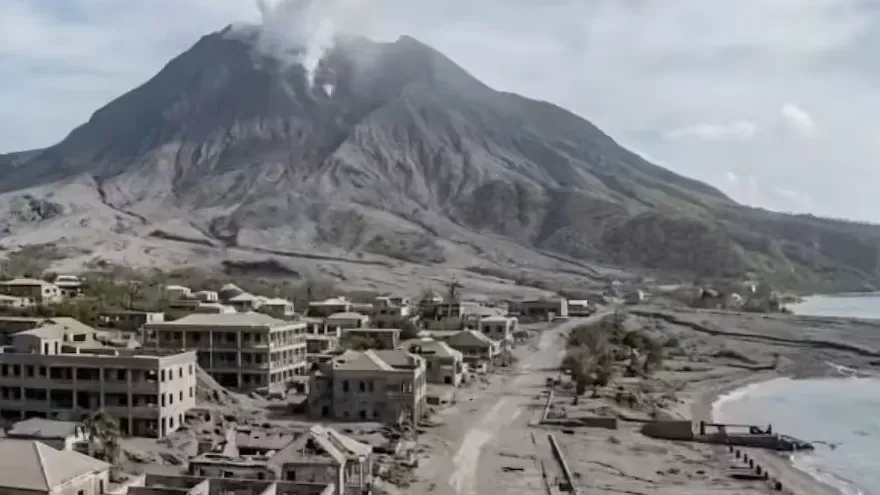
So why is it now a desolate lunar landscape? The answer loomed silently right behind the city: the Soufrière Hills volcano.
For nearly 400 years, the volcano had been completely dormant. Generations of people built their homes, raised their children, and paved their streets in its shadow, completely unaware of the ticking time bomb above them. But in July 1995, the giant woke up.
It began belching ash and smoke, sending ominous tremors through the town. As the eruptions grew more violent over the following months, it became clear that Plymouth was in the direct line of fire.
In 1997, the final blow came. A massive eruption sent devastating pyroclastic flows—superheated avalanches of toxic gas, ash, and boulders—racing down the mountain at hundreds of miles per hour.
The Frantic Exodus
The evacuation was panicked and absolute. The government was forced to declare the entire southern half of the island an exclusion zone.
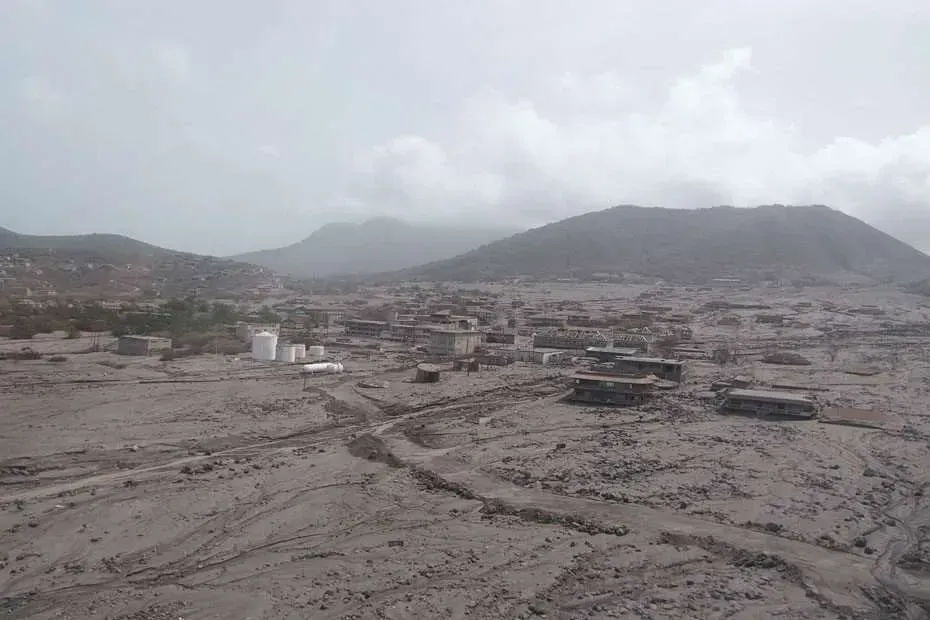
People fled with only the clothes on their backs, forced to abandon their businesses, family heirlooms, and beloved homes. There was no time to pack, and there would be no coming back. Following the pyroclastic flows, massive boiling mudslides—known as lahars—swept through the valleys. They buried the once-colorful streets of Plymouth under nearly 40 feet (12 meters) of concrete-hard ash.
A Monument in Gray
Today, Plymouth is the only completely buried volcanic ghost town of the modern era. It remains strictly off-limits to the general public, as the Soufrière Hills volcano is still active and closely monitored.
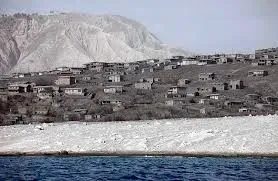
Those who are allowed to venture into the exclusion zone with scientific guides look out over a haunting, silent sea of gray. It is a literal modern-day Pompeii.
Beneath the hardened earth, cash registers still sit full of coins, office desks are frozen in time, and dinner plates rest on tables crushed by tons of rock.
It serves as a breathtaking and chilling reminder that no matter how permanent our cities feel, the Earth always has the final say.