The Village Swallowed by an Emerald Sea: The Secret of Houtouwan
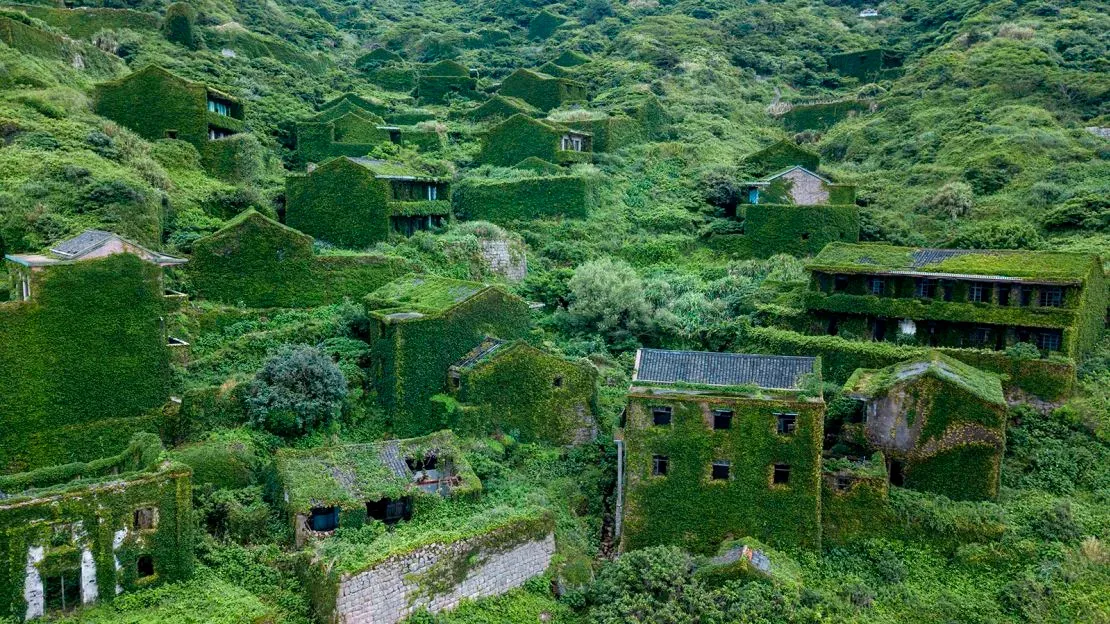
Tucked away on a rugged cliffside in the Shengsi Archipelago of China, you might think you’ve stumbled into a fairy tale. From a distance, it looks like a lush, terraced hillside plunging into the East China Sea. But as you look closer, the soft green hills reveal sharp angles and hollow squares.
These are not just bushes and trees—they are entire houses, completely swallowed by a thick, velvety blanket of creeping ivy. Step through a doorway framed by vines, and you will find rotting wooden chairs and moss-covered kitchen counters. How did this once-thriving coastal community become a living, breathing green ghost town?
A Fishermen’s Paradise
The story of Houtouwan began not with diamonds or coal, but with the ocean’s bounty. Located just a few hours from the bustling metropolis of Shanghai, this bay was once home to some of the richest fishing grounds in the region.
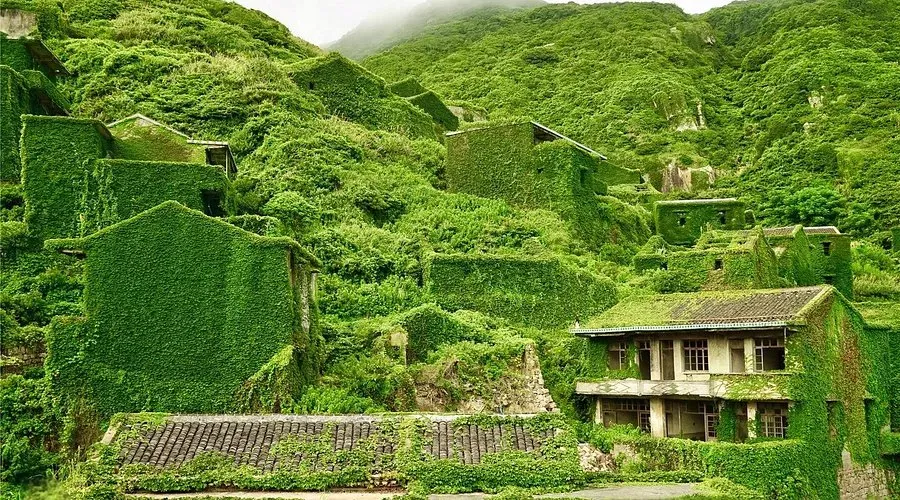
In the 1950s, the village experienced a massive boom. Over 3,000 residents lived in Houtouwan, making it a prosperous and lively community. The wealthy fishermen built grand, multi-story brick homes right into the steep cliffs to secure the best views of the water. Narrow, winding staircases connected the bustling docks to the houses above, echoing with the sounds of daily trade, playing children, and the constant crash of the waves.
The Quiet Exodus
Unlike other ghost towns destroyed by sudden disasters or dried-up resources, Houtouwan’s demise was brought on by the very thing that built it: progress.
As the fishing industry modernized in the 1990s, ships became larger and required deeper, more accessible ports. Houtouwan’s small bay could no longer accommodate the massive modern trawlers. Furthermore, the village’s steep, isolated geography became a burden.
There were no roads for cars—every piece of food, clothing, and equipment had to be carried up the exhausting cliffside stairs by hand.
Families began to realize that traveling to the mainland to buy groceries or send their children to school was simply too difficult. Slowly at first, and then in a rapid wave, residents packed up whatever they could easily carry and moved to the neighboring towns or to Shanghai.
Because moving heavy furniture down the steep steps was a logistical nightmare, most of it was simply left behind. By 2002, the village was officially depopulated.
An Emerald Reawakening
Once the footsteps faded and the doors were locked, the damp, subtropical climate went to work. With no humans left to trim the weeds or clear the pathways, nature launched a rapid invasion. Within just a single decade, aggressive climbing vines, ferns, and mosses crawled up the brick walls, smashed through the glass windows, and woven themselves across the rooftops.
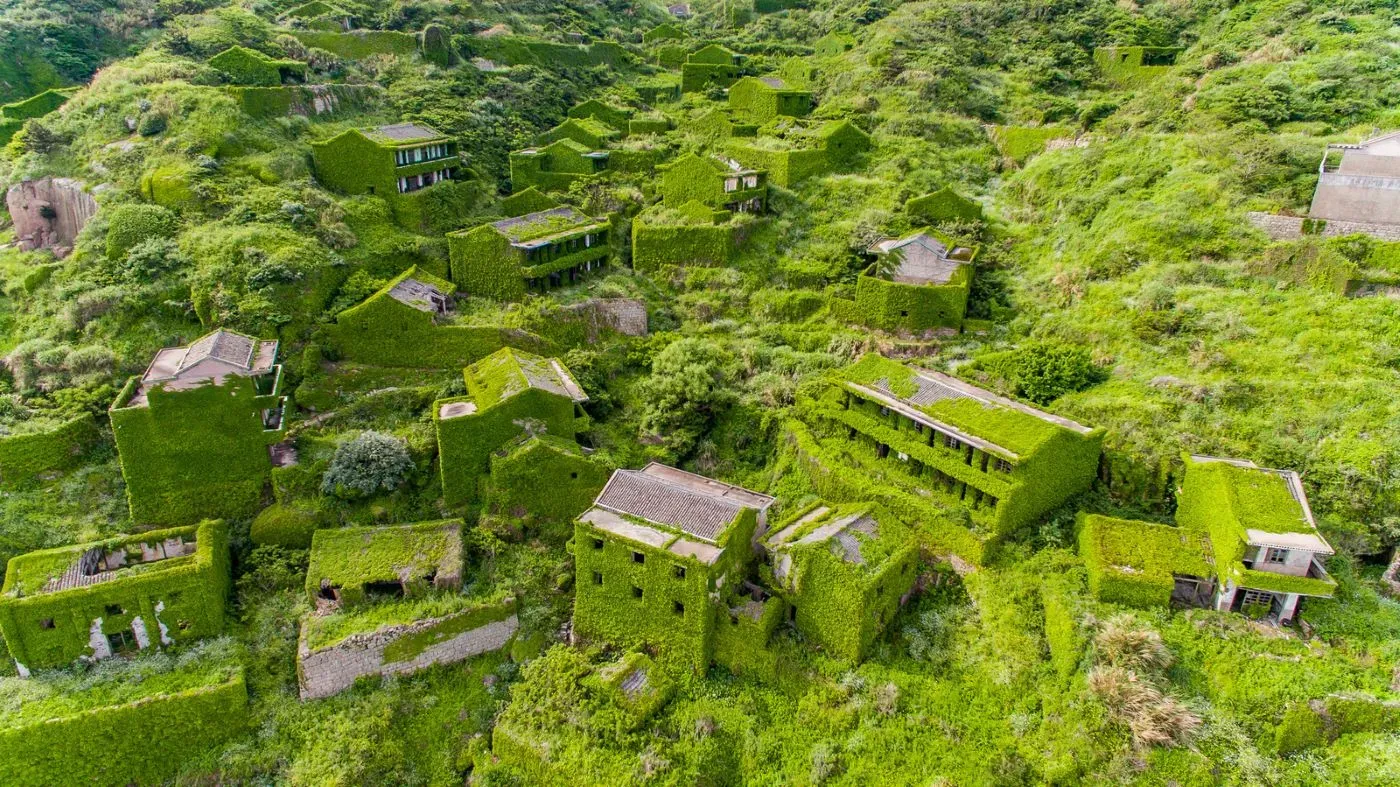
Today, Houtouwan is a mesmerizing post-human landscape. It has become an accidental tourist attraction, drawing photographers who marvel at the surreal beauty of the overgrown ruins. Walking through the silent, leaf-cushioned streets is a stunning visual reminder: no matter how heavily we build, nature is always ready to take it all back the moment we look away.